

Choosing a POS for a cafeteria, café or restaurant in the UAE
What a UAE cafeteria, café or small restaurant needs from a till, from fast counter orders and add-ons to kitchen tickets, tables, split bills and food cost.
How to cost a recipe, why yield and VAT change the answer, and a weekly routine that shows where food money goes in a UAE café, cafeteria or restaurant.
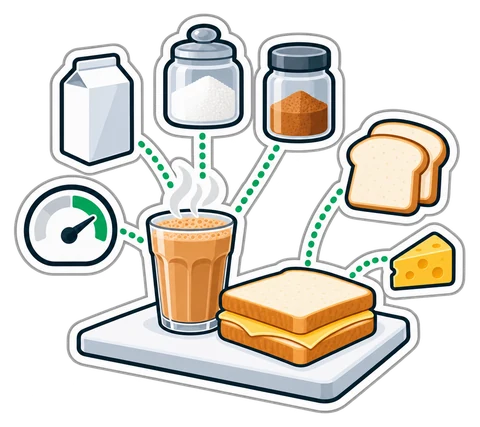
A busy cafeteria can sell hundreds of sandwiches and cups of karak a day and still end the month with less money than expected. The usual reason is not the rent or the salaries; it is food cost that nobody measured. This article shows how to cost a recipe properly, how to compare what you should have used with what you did use, and where the gap usually hides.
Food cost percentage is what the ingredients of a dish cost you, divided by what you receive for it. Two details catch many owners out.
First, in the UAE the menu price shown to customers includes 5% VAT, and that VAT is not yours. Divide the menu price by 1.05 to get the net price before you calculate anything. A AED 12 sandwich brings in AED 11.43, not 12.
Second, cost the ingredient as it reaches the plate, not as it arrives from the supplier. Chicken loses weight when it is trimmed and cooked; lettuce loses outer leaves; a bag of bread has an end nobody wants. The share you can actually serve is the yield.
Here is a chicken sandwich sold at AED 12. These are example numbers, not a statistic; use your own supplier prices.
| Ingredient | Portion | Cost basis | Cost (AED) |
|---|---|---|---|
| Bread roll | 1 | AED 0.60 each | 0.60 |
| Chicken, cooked | 120 g | AED 24.00/kg raw, 70% yield = AED 34.29/kg cooked | 4.11 |
| Garlic sauce | 30 g | AED 10.00/kg | 0.30 |
| Pickles and salad | about 50 g | mixed | 0.35 |
| Wrap paper and bag | 1 | AED 0.15 | 0.15 |
| Total | 5.51 |
Food cost: 5.51 ÷ 11.43 = 48%. If you had used the raw chicken price and ignored the yield, the chicken line would have been AED 2.88, the total AED 4.28 and the food cost a comfortable-looking 37%. Same sandwich, eleven points of margin that only exist on paper.
Many cafés aim for a food cost somewhere around 28-35%, depending on the concept and rent. At 48% you have three honest options:
Do the same for your drinks. A karak at AED 2 (net AED 1.90) with tea, evaporated milk, sugar, spice and a paper cup costing about AED 0.63 runs at roughly 33%. Small items add up because they sell in such numbers.
The recipe card gives you the theoretical food cost: what the month's sales should have used. The stockroom gives you the actual food cost:
Actual food cost = opening stock + purchases − closing stock, divided by net sales.
The gap between the two is the money you want to find. In most kitchens it comes from the same few places:
A gap of one or two points is normal. A gap of five or more means one of the items above is happening every day.
Modifiers change cost as well as price. "Extra cheese" for AED 2 is fine if it really adds 20 g of cheese; "no sauce" saves you nothing if the cook adds it anyway. Price each add-on with its own small recipe.
Prep batches need their own cards. If one batch of garlic sauce uses 2 kg of mayonnaise, 300 g of garlic and lemon, cost the batch, then cost the 30 g portion from it.
During Ramadan, iftar boxes and set meals are prepared in large numbers before sunset. Cost them like any dish, plan quantities from last year's sales by day, and record what is left at the end of the evening; this is the month where waste moves fastest.
A spreadsheet can hold your recipe cards, but it cannot see each sale. A point of sale can. In CreekPOS, a product can carry a recipe: each sale takes the ingredients off stock, and a modifier such as extra cheese changes the quantities. Prep batches and waste are recorded in the same place, and the ingredient and food-cost reports show what sales should have used next to your stock movements. The details are on the features page, with stock tools under inventory.
Should I calculate food cost on the menu price or the net price? On the net price, after removing the 5% VAT. Otherwise every percentage looks better than it is.
What is a good food cost percentage? It depends on your rent, concept and volume. Many cafés aim for around 28-35%; what matters most is that you know your number and it stays stable.
How often should I update recipe costs? Whenever a main supplier changes a price, and at least once a month for fresh items.
Do staff meals count as food cost? Record them separately so you can see them. How they are treated in your books and for tax is a question for your accountant.
Want to see recipes and food cost on a real menu? Open the café demo or start a 14-day trial with your own dishes.
This article is general information as of its date, not legal or tax advice. Rules change; check the official source or ask your accountant before acting.

What a UAE cafeteria, café or small restaurant needs from a till, from fast counter orders and add-ons to kitchen tickets, tables, split bills and food cost.
From the trade licence and food approvals to the menu, equipment, VAT and the first week of service: a practical checklist for opening a cafeteria in the UAE.

How to plan and run a stock-take in a small UAE shop in one evening, with zones, two-person teams, recounts and variance valued at cost, so the numbers can be trusted.
CreekPOS Online free for 14 days, or the program on your PC for 7 days. Every feature, no card.
Search by feature, screen or task. Open a guide and share its link with your team.