Coffee, cardamom, nuts and sweets are sold by weight, in containers, in front of the customer, and roasted or packed in the back. A clear way to price every gram, print honest labels and know what roasting really costs.
A roastery or a spice shop sells hundreds of small weighed sales a day. A quarter kilo of Arabic coffee with cardamom, 100 g of saffron threads, half a kilo of mixed nuts in a plastic box, AED 20 of dates. Every one of those sales has three ways to go wrong: the container weighed with the product, a price per kilo typed wrong, and a bag packed in the morning that nobody can price at the counter.
Prices per unit, not per bag
Price every loose product per kilo (or per 100 g for saffron and cardamom). The till turns any weight into money and any money into weight. The cashier can type "250 g", "0.25 kg", "a quarter", or "AED 20", and the customer pays exactly what the scale says.
Tare: never sell the box
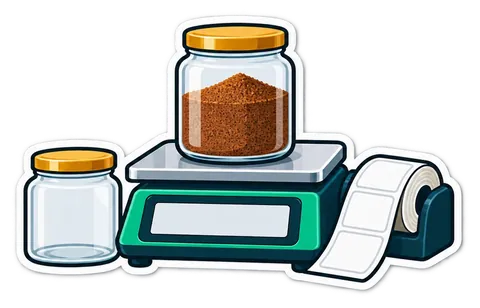
The plastic box, the glass jar and the paper bag weigh something. Weighed with the coffee, they are sold at the price of coffee. Set your containers once — box 50 g, jar 180 g, small bag 8 g — and pick the container when you weigh. The till takes the weight off and prints it on the receipt: "gross 0.300 − tare 0.050 kg". Customers notice that line, and they trust it.
Bags packed in the morning
Most roasteries pack the best sellers before opening: 250 g and 500 g bags of house blend, 1 kg of dates for gifts. Each bag needs a label with its net weight, price per kilo, total price, packing date and best-before date, and a barcode the till can read.
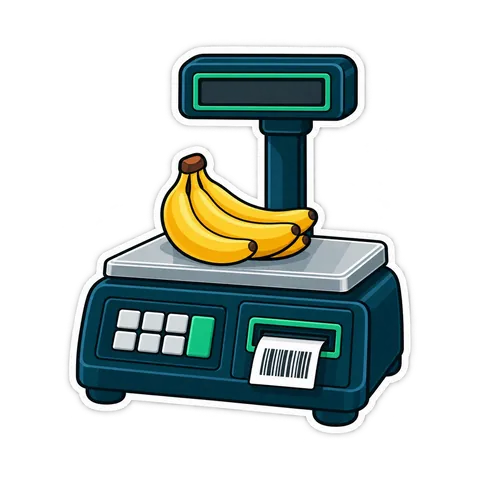
- A label-printing scale prints such labels by itself. Set the till to read its barcodes (they start with 20–29 and carry the price or the weight) and give each product the short code the scale uses.
- Without such a scale, print weighed labels from the back office on a label printer: weigh, print, stick. The barcode on the label carries the weight, so the till rings up exactly that bag.
Roasting is not free
Ten kilos of green coffee do not become ten kilos of roasted coffee; they become about eight and a half. If you price roasted coffee from the cost of green, you lose money on every bag. Record each roast as a batch:
- In: 10 kg green beans at their cost.
- Out: 8.4 kg roasted, plus any extra cost (gas, labour) you want to carry.
- The loss (16 %) is recorded and the cost per roasted kilo is worked out for you.
The same applies to grinding, mixing spice blends and packing a sack into bags. Shrinkage and drying are recorded as their own reasons, not as missing stock.
Know your stock in kilos
A stock list that says "Arabic coffee: 37" is useless. You need kilos and their value, per product, and the bags already packed. Count the open bins at the end of the week; the difference from the till's figure is your real waste.
Keep the counter moving
- Put the ten best sellers on the first screen of the till.
- Use the scale connected to the till; typed weights are where errors start.
- Weigh into the container already on the scale only if you picked the container first.
In CreekPOS
Sell by weight and volume is in CreekPOS Online from Gold, with templates for roasteries, spice shops, sweets and butchers: units, containers and their tare, money entry, scale-label barcodes, weighed labels, and Inventory → Roast, grind and pack for batches. Reports → Stock by weight shows kilos and value. Read the manual chapter, our article on barcodes and scale labels, and the roastery page. The desktop program does not have these yet.
This article is general information as of its date, not legal or tax advice. Rules change; check the official source or ask your accountant before acting.